The App Overload Problem
There are hundreds of apps marketed as solutions to household money stress. The problem is that most people download two or three, use them inconsistently for a few weeks, and abandon them - not because the tools are bad, but because they chose without a clear sense of what they actually needed.
Understanding the main categories of financial tools - and what each category genuinely does - is a more useful starting point than chasing any single recommendation. For a broader look at how digital tools fit together across household life, see The Digital Toolkit Every Household Actually Needs.
~80%
Adults who say they budget, but fewer track consistently
According to Gallup polling, roughly 8 in 10 American households report having a budget, though consistent tracking remains far less common.
$200+
Average monthly spending on subscriptions per household
Research from various consumer finance surveys suggests many households significantly underestimate recurring subscription costs.
Budgeting Apps: What They Actually Do
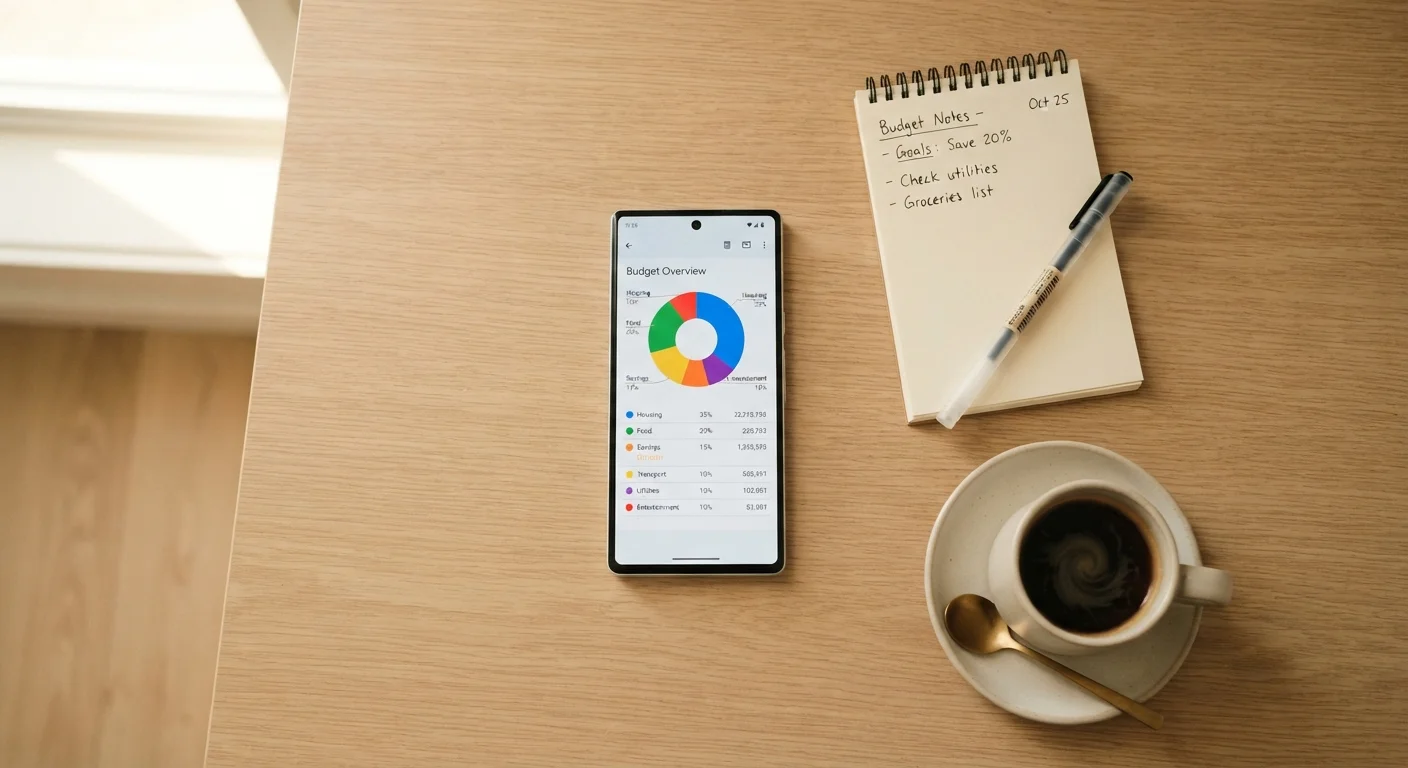
A budgeting app does more than track spending - it compares your actual spending against a plan you set in advance. You define spending limits by category (groceries, utilities, dining out), and the app flags when you're approaching or over those limits.
Most budgeting apps connect directly to bank accounts and credit cards to pull in transactions automatically. This reduces manual entry but requires you to review the app's data-sharing and privacy practices before linking accounts. Look for apps that use read-only access and disclose how your data is stored or shared.
If you've never built a budget before, starting with clear categories is essential. The seven-step household budget guide is a practical foundation before layering in any app.
Before connecting any financial app to your bank account, check whether it uses read-only access and review its data-sharing policy - especially whether it sells aggregated data to third parties.
Account-linked apps vary widely in how they handle your financial data; understanding this upfront protects your privacy and reduces exposure if the app is breached or sold.
Set a monthly 'money date' - a 15-minute calendar block to review your tracking app or spreadsheet - rather than checking it reactively when you're already stressed about spending.
Consistent, low-pressure review sessions help you catch trends early and make small adjustments before they become larger financial problems.
Expense Trackers: Visibility First
Expense trackers are a step simpler than full budgeting apps. Their core job is to show you where money went - categorized, searchable, and usually visualized as charts or summaries. They don't necessarily enforce a plan; they give you visibility.
This category is useful for households that aren't ready to commit to a full budget but want to stop being surprised at the end of the month. Many people find that simply seeing their spending patterns changes behavior on its own.
Some people prefer this kind of low-friction tracking to spreadsheet entry. For a comparison of approaches, tracking your spending without spreadsheet headaches walks through practical alternatives.
Beware of App Permissions Scope
Some expense-tracking apps request broader account permissions than their core function requires, including write access or the ability to initiate transfers. Always review requested permissions carefully before authorizing any financial tool. If an app asks for more access than its stated function needs, that's worth pausing on.
Bill Reminders and Payment Tools
Late fees are one of the most avoidable household expenses. Bill reminder tools - ranging from dedicated apps to calendar-based systems - notify you before a payment is due so you're never caught off-guard.
Some tools go further, aggregating all your bills in one dashboard so you can see total monthly obligations at a glance. This is particularly useful for households juggling multiple subscriptions and utility accounts. Before auto-renewing any service, a structured review helps - see the monthly bill audit checklist for a guided approach.
Automatic bill pay is a related feature offered by most banks and many billers. It eliminates late fees but reduces visibility. A practical middle ground: automate minimum or fixed payments, and manually review variable bills each month.
Spreadsheets: Still a Legitimate Option
Spreadsheet tools like Google Sheets or Excel remain genuinely useful for households that prefer manual control, privacy from third-party apps, or custom structures. A well-organized spreadsheet can replicate most budgeting-app functionality without account linking.
The trade-off is manual data entry, which requires discipline. For some, that friction is a feature - it creates awareness. For others, it becomes the reason they stop tracking entirely. If you're weighing analog versus digital approaches more broadly, paper ledger vs. digital tracking covers the real trade-offs honestly.
Free Tiers Are Often Enough
Many budgeting and tracking tools offer free tiers that cover the features most households actually use - transaction categorization, monthly summaries, and basic alerts. Paid plans typically add premium features like investment tracking or custom reporting. There's no need to pay until you've identified a specific gap the free version doesn't cover.
How to Choose Without Getting Overwhelmed
The most important question isn't which tool is most popular - it's what specific problem you're trying to solve. If you don't know where your money goes, start with an expense tracker. If you overspend in specific categories, a budgeting app adds the guardrails. If late fees are the issue, a bill reminder tool solves it directly.
Start with one tool. Use it consistently for 30 days before adding another. Most households function well with a single budgeting or tracking app plus their bank's built-in notification features.
For households exploring method-based approaches rather than app-based ones, the envelope budgeting method adapted for debit cards is worth considering. And for a comprehensive roadmap covering everything from income calculation to long-term adjustments, Household Budgeting from the Ground Up offers end-to-end guidance.
This article provides general financial information for educational purposes only. It is not personalized financial advice. For guidance specific to your situation, consult a qualified financial professional.