
Start With What a Budget Actually Does
A budget is simply a written plan for how your money will move each month. It doesn't tell you to stop spending - it tells you where you're spending so you can make deliberate choices instead of wondering where your paycheck went. If that framing is new to you, the overview of what a household budget really means is a useful starting point.
The seven steps below are designed for someone building a budget for the very first time. You don't need special software, financial training, or a tidy income. You just need about an hour and a recent bank statement.
Take-home pay
The amount deposited in your account after taxes and other payroll deductions are removed - the real number to build a budget around.
Fixed expense
A cost that stays the same each month regardless of your behavior, such as rent, a car loan payment, or an insurance premium.
Variable expense
A cost that changes month to month based on choices you make, such as groceries, gas, or dining out.
Budget surplus
What remains when your total expenses are less than your total income - money you can actively decide where to direct.
Irregular expense
A real but infrequent cost - like an annual car registration or holiday gifts - that is easy to forget when building a monthly budget.
Miscellaneous buffer
A small planned category in your budget to absorb minor surprises so one unexpected purchase doesn't derail the whole plan.
Step 1-2: Know Your Income and Track Every Expense
Step 1 - Add up your take-home pay. Use the amount that actually hits your account after taxes and payroll deductions - not your gross salary. If your income varies, use a conservative estimate based on your lowest recent months. Include every regular source: wages, freelance payments, side work, government benefits.
Step 2 - List every expense from the past 30 days. Pull a bank or credit card statement and write down every transaction. Don't filter anything out yet. Subscriptions you forgot about, the random convenience-store stop, the monthly parking fee - all of it goes on the list. This step is often the most eye-opening part of the whole process.
Use a highlighter to spot patterns fast
Print or export your bank statement and use two colors - one for needs, one for wants. Patterns jump out much faster visually than when you're reading rows of numbers. This simple trick makes Step 3 significantly quicker.
Step 3-4: Sort Expenses and Do the Math
Step 3 - Split expenses into fixed and variable. Fixed expenses stay the same each month: rent or mortgage, car payment, insurance premiums, loan minimums. Variable expenses shift: groceries, gas, dining out, entertainment. Knowing which is which tells you where you actually have room to adjust - you generally can't negotiate your rent down this weekend, but you can change how much you spend on takeout.
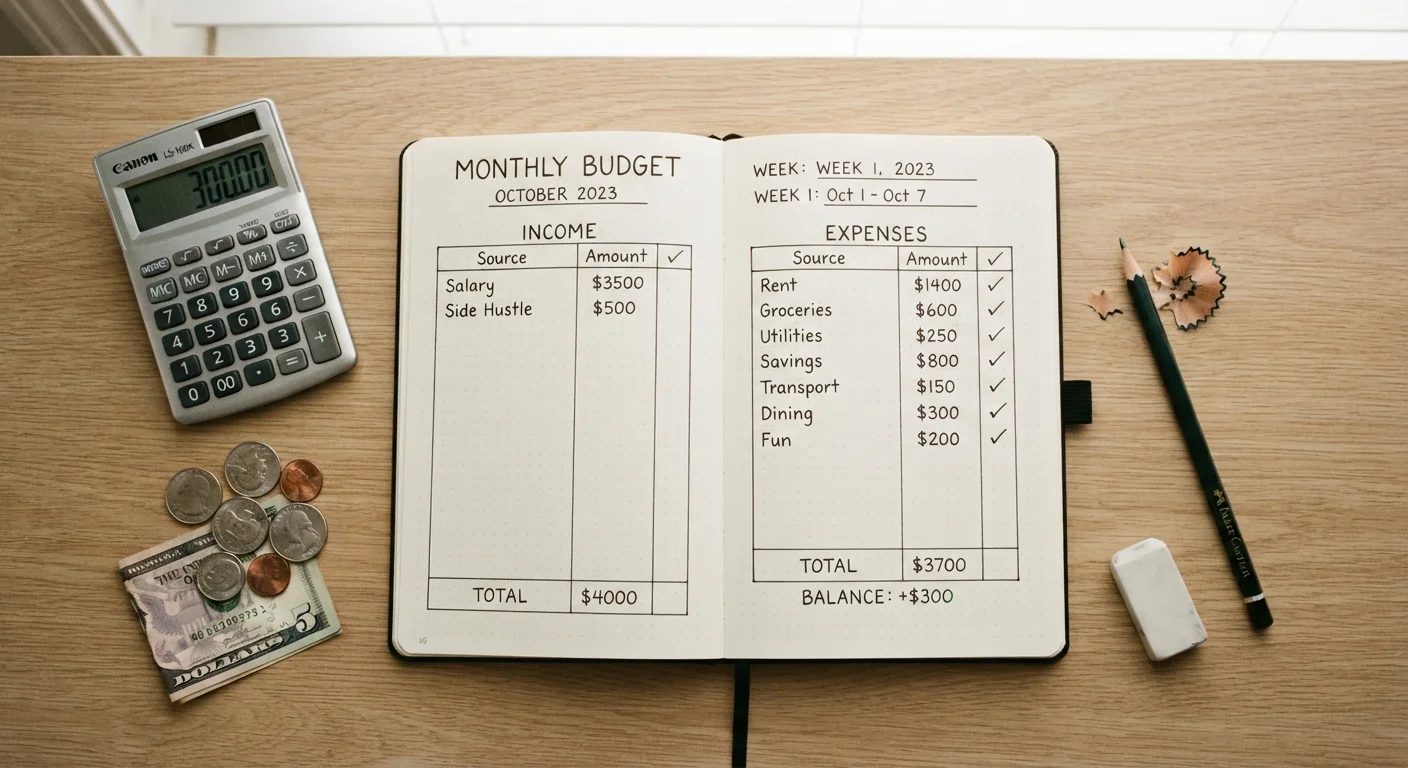
Step 4 - Subtract total expenses from total income. If the result is positive, you have money left to allocate intentionally. If it's zero or negative, something has to shift - either income goes up or at least one expense category comes down. Either outcome is useful information. The complete budgeting roadmap goes deeper on how to handle a negative gap.
Don't skip the irregular expenses
Annual and semi-annual costs - insurance renewals, car registration, holiday spending - are the most common reason a budget that looks balanced on paper falls apart in practice. Write them all down, divide by 12, and add that monthly slice into your plan from the start.
Step 5-6: Set Limits and Build In a Safety Valve
Step 5 - Assign a spending limit to each variable category. Look at what you actually spent last month, then decide what's realistic going forward. Be honest rather than optimistic - a limit you can't keep will just erode your confidence. For categories tied to annual costs (holiday gifts, car registration, insurance renewals), divide the yearly total by 12 and include that monthly slice so the expense doesn't blindside you.
Step 6 - Add a small miscellaneous buffer. Life doesn't follow spreadsheets. A modest catch-all category - even $20 or $30 - absorbs the small surprises that would otherwise blow up your plan. This is separate from emergency savings, which you'll want to build toward over time. For a practical path to getting savings started, see Building a Savings Habit from Zero. For spending-category-specific ideas, the Spending by Category hub offers targeted guidance. If you prefer digital tools to track limits automatically, an overview of household finance apps can help you weigh your options.
Step 7: Review and Adjust Every Month
Step 7 - Check in at the end of each month. Compare what you planned to spend against what you actually spent in each category. Where did you come in under? Where did you go over? A five-minute review prevents small drift from becoming a permanent habit. Adjust limits that were unrealistic - budgets are meant to be living documents, not rigid rules carved in stone.
Most budgets that fail do so in the first two weeks, usually from small overlooked leaks rather than one big splurge. The guide on why budgets fail early walks through the most common stumbles and how to sidestep them before they become habits.
Staying consistent with monthly reviews is what separates a budget that actually changes your financial picture from one that sits in a drawer. Keep it simple, keep it honest, and adjust as your life changes.
This article is for general informational and educational purposes only. It is not personalized financial advice. For guidance specific to your situation, consult a qualified financial professional.