What Each Tool Is Actually Designed to Do
Note-taking apps and word processors both let you type text on a screen, which is why people often treat them as interchangeable. They're not - and reaching for the wrong one creates unnecessary friction. Understanding what each was built for is the fastest way to figure out which belongs in your workflow.
Note-taking apps are built for speed, flexibility, and retrieval. The design philosophy behind tools in this category is that capturing an idea should take as little effort as possible - no filename, no formatting decisions, no waiting for a template to load. They typically support tags, notebooks or folders, full-text search, and cross-device sync. Some also allow embedded images, web clippings, and audio. The result is a searchable personal archive you can build over time.
Word processors are built for structure and presentation. They assume you already know what you're writing - a report, a letter, a proposal - and give you the controls to format it appropriately. Features like styles, headers, page margins, footnotes, and track changes exist because finished documents need to look a specific way and often pass through multiple hands. Word processors are document-centric by nature: you name the file, you manage where it lives, you control how it's exported.
If you're looking for a broader introduction to how these tools fit into a digital organization system, the guide to digital organization basics covers notes, tasks, and calendars as a connected whole.
| Criterion | Note-Taking Apps | Word Processors |
|---|---|---|
| Primary purpose | Capture and retrieve ideas | Draft and format finished documents |
| Speed of capture | Very fast, minimal setup | Slower - requires file naming and structure |
| Formatting control | Basic, intentionally limited | Extensive styles, margins, headers |
| Search and retrieval | Full-text search across all notes | File-by-file; requires folder organization |
| Collaboration | Varies; often limited | Strong - track changes, comments, sharing |
| Cross-device sync | Built in for most apps | Depends on platform or cloud service |
| Best output format | Personal reference and working notes | Reports, letters, formal documents |
Where Each Tool Falls Short
Neither tool is without limitations - and those gaps are often where people run into trouble.
Note-taking apps can become cluttered fast. Without a consistent tagging or naming habit, a notes library can turn into an unsearchable pile within a few months. They also handle complex formatting poorly: if you try to use a notes app to write a multi-page structured document, you'll quickly bump into missing features like proper heading hierarchies, automatic table of contents generation, or consistent font control.
Word processors slow you down when you just need to capture something quickly. Opening an application, naming a file, and choosing a save location adds cognitive overhead that interrupts the capture moment. They also tend to organize content around individual files rather than a connected knowledge base, which makes it harder to search across everything you've written.
78%
Workers who use multiple productivity apps daily
According to a Asana State of Work report, the majority of knowledge workers regularly switch between several digital tools to complete their tasks.
2-3x
More time spent searching poorly organized files
Research from information management studies consistently shows that disorganized digital storage significantly increases time spent locating documents and notes.
The practical takeaway: use each tool for what it does well, and don't force either into a role it wasn't designed for. If you're also comparing analog versus digital approaches to record-keeping more broadly, the paper ledger vs. digital tracking comparison explores similar trade-offs in a financial context.
When Using Both Makes Sense
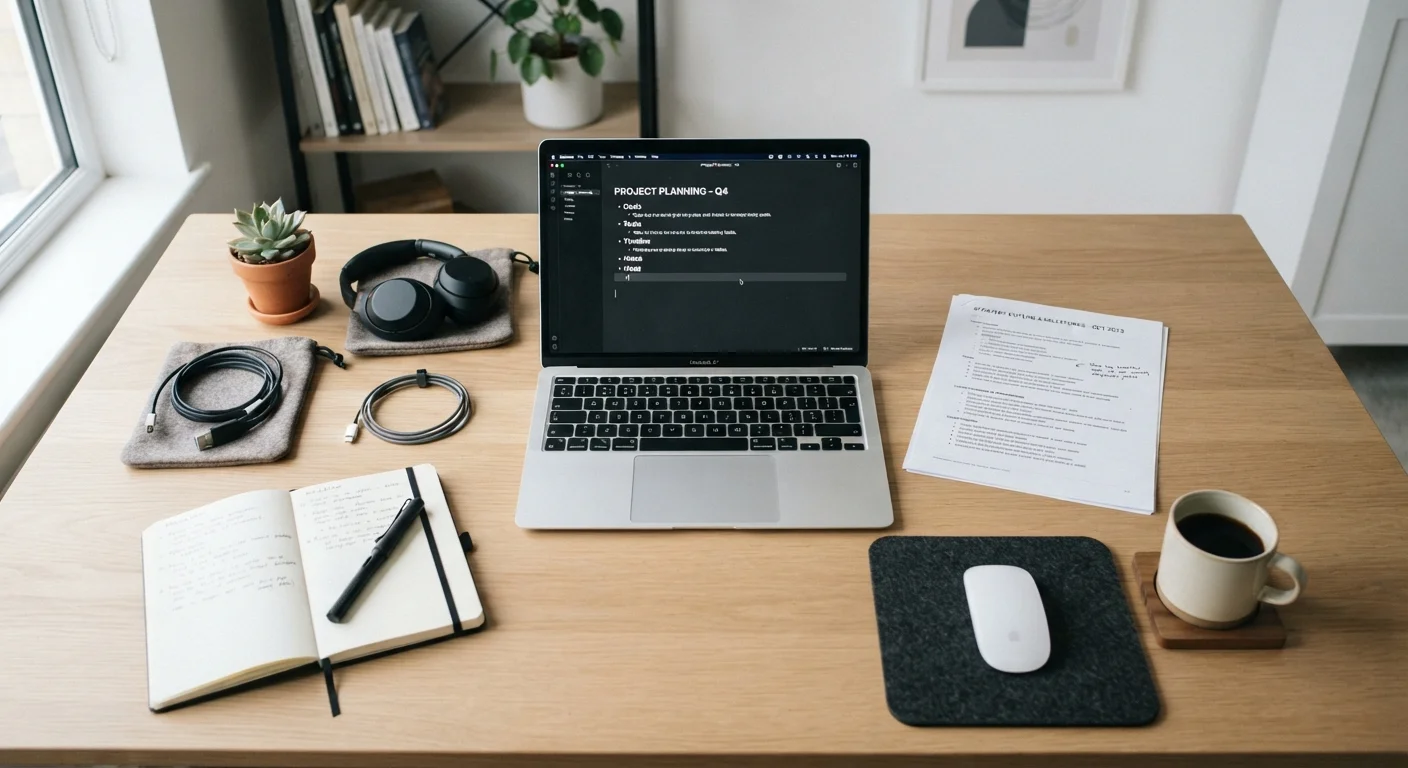
For many people, the right answer isn't choosing one tool over the other - it's using both in sequence. A common and effective workflow looks like this: capture raw ideas, meeting notes, and reference material in a note-taking app during the day; then move polished, shareable work into a word processor when it's time to produce a finished document.
This two-stage approach keeps your capture friction low while still giving you the formatting control you need at the output stage. It also protects you from the common mistake of treating a notes app as a document archive or a word processor as a scratch pad - roles neither handles well.
If you're setting up or refining a home office where work and personal admin both happen, thinking through how these tools fit your physical space and daily routine matters too. The home office organization guide offers practical guidance on building systems that separate different types of tasks without adding complexity.
A Note on Overlap and Cloud Docs
Some cloud-based document editors have added note-like features - quick capture, tagging, or informal formatting - blurring the line between categories. These hybrid tools can work well if they genuinely fit how you think and work, but it's worth evaluating them against the same criteria: how fast can you capture, how well can you search, and how much formatting control do you need? A tool that tries to do everything sometimes does nothing particularly well.