Why Seller Credibility Matters More Than Price
Finding a low price online is easy. Finding a seller you can actually trust is the harder skill. Fraudulent storefronts, counterfeit goods, and sellers who disappear after payment are genuine problems - the FTC receives hundreds of thousands of online shopping complaints each year. The good news is that legitimate sellers consistently display certain signals, and once you know what to look for, evaluating an unfamiliar retailer takes only a few minutes.
This applies whether you're on a standalone website or a marketplace listing. For a practical framework before completing any order, our pre-purchase checklist for online shoppers is a useful companion read.
The Core Trust Signals to Evaluate
The following practices cover the most reliable indicators of a trustworthy online seller. None alone is definitive, but when several are absent, that absence compounds into meaningful risk.
Verify that the seller provides a real physical address and working contact details.
Legitimate businesses stand behind a traceable location. A missing address, a broken phone number, or a contact form with no email alternative are common features of fly-by-night operations. You can cross-check a listed address using a mapping tool to confirm it corresponds to a real business premises.
Confirm the site uses a secure, encrypted connection before entering any personal data.
A URL beginning with 'https://' and a padlock icon in your browser's address bar indicates that data transmitted to the site is encrypted. Shopping on an unencrypted ('http://') page exposes payment and personal details to interception. This is a minimum standard, not a guarantee of legitimacy.
Read the return, refund, and shipping policies in full before purchasing.
Trustworthy sellers publish clear, specific policies - not vague one-liners. Watch for policies that place all responsibility on the buyer, charge restocking fees for defective items, or require international return shipping at your expense. Unclear or absent policies are a meaningful risk indicator.
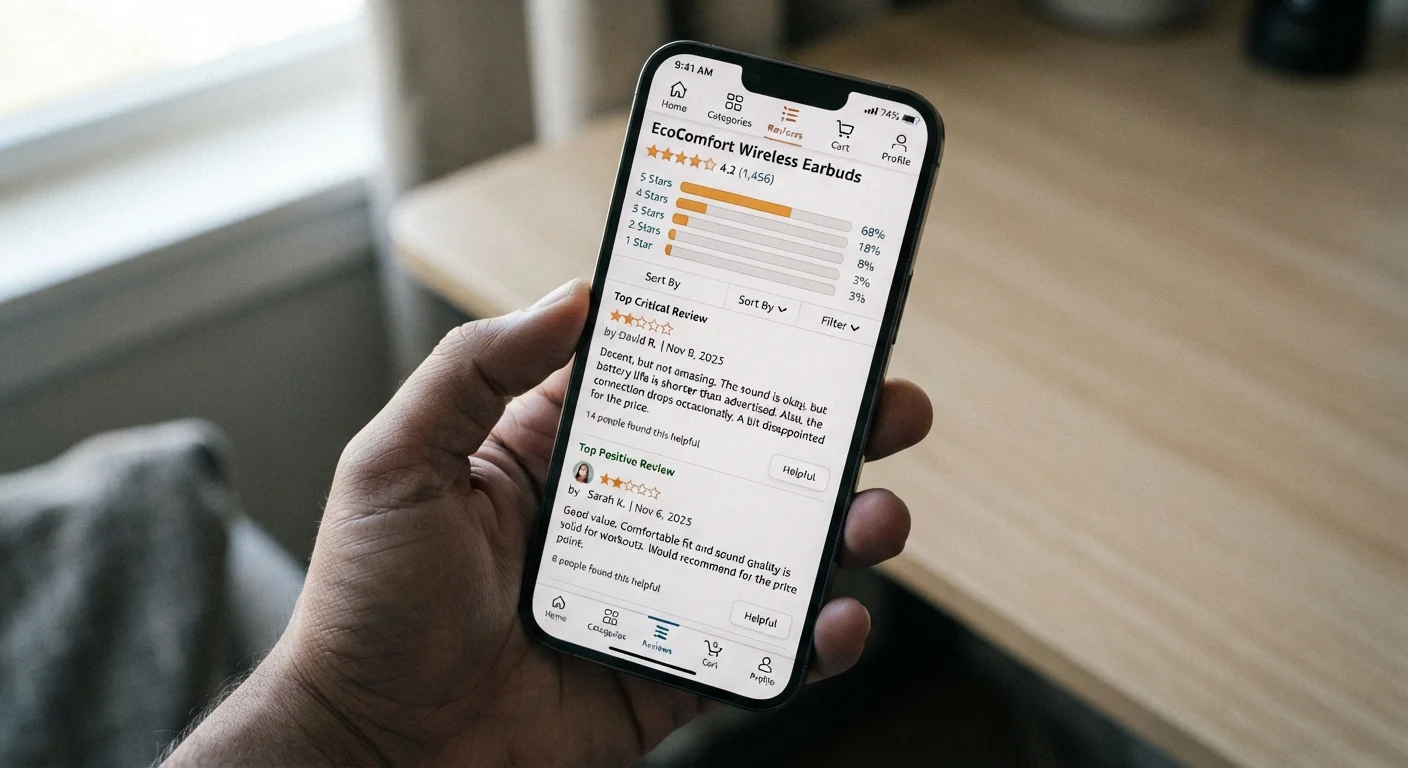
Evaluate review patterns critically, looking for consistency and specificity.
Authentic reviews tend to vary in tone, mention specific product details, and include both positives and negatives. A wall of five-star reviews with near-identical phrasing, all posted within a short period, suggests manipulation. Our guide to spotting fake reviews covers the patterns in detail.
Check for third-party trust signals such as BBB accreditation or verified payment logos.
While no badge is foolproof - some can be faked - legitimate seals from the Better Business Bureau or recognized payment processors indicate accountability. Click any trust badge rather than just reading it; a real badge links to a verifiable external profile.
Treat dramatically low prices as a due-diligence trigger, not a deal.
Pricing far below market rate is a classic tactic used by fraudulent storefronts to attract impulsive buyers. Use it as a signal to slow down and apply extra scrutiny, not to rush the purchase. Compare against known retailers to calibrate what a realistic price looks like.
Marketplaces and independent stores differ
Sellers on major marketplaces operate under the platform's seller rules, which may offer buyer protections that independent storefronts do not. When shopping outside a known marketplace, the due diligence on individual sellers matters more. See our guide to marketplaces vs. brand websites for a fuller comparison.
Quick Checks You Can Do Before You Buy
You don't need to be a cybersecurity expert to protect yourself. Most of the meaningful due diligence takes under five minutes and requires no special tools.
For broader guidance on keeping your financial data safe during checkout, see our article on protecting your payment information when shopping online. And if you apply similar scrutiny to apps, our guide to evaluating a new app before downloading uses the same logic in a different context.
“The presence of a padlock icon doesn't mean a site is honest - it only means your connection to that site is encrypted. Scammers use HTTPS too.”
— Federal Trade Commission, U.S. consumer protection agency
Building the Habit
Trustworthy sellers aren't hard to find - they're just easy to take for granted until something goes wrong. By running through these signals consistently, you shift from reactive to proactive. The five minutes spent verifying a seller before a $60 purchase can prevent weeks of frustration trying to recover funds or dispute a charge.
Staying safe while shopping online connects to broader digital habits covered in our Internet Safety Basics hub. The same pattern recognition that helps you spot a dubious seller also applies to other areas of your online life.
This article is for general informational purposes only. It does not constitute legal, financial, or consumer protection advice. Readers should verify current guidance with relevant authorities and exercise independent judgment when making purchasing decisions.