Why Shopping Myths Stick Around
Marketing messages are designed to feel like common sense. When a tactic is repeated often enough - by advertisers, well-meaning friends, and social media posts - it starts to feel like established wisdom. The problem is that many widely believed shopping rules don't actually hold up when you check the data.
Understanding where these myths come from is the first step toward ignoring them. Retailers use pricing psychology, urgency cues, and loyalty mechanics that exploit exactly the assumptions shoppers bring through the door. The myths below are among the most financially costly - and the most persistent.
For a broader look at predictable overspending patterns, see why shoppers overpay. And if time-pressure messaging is something you encounter constantly, what 'limited time offer' actually means is worth a read.
Myth
Holiday sales - Black Friday, Cyber Monday, end-of-year events - offer the lowest prices of the year.
Fact
Many holiday sale prices match or are only marginally lower than prices available at other points in the year, and some items are actually cheaper in other seasons.
Retailers know shoppers expect deep discounts during major sales events, so some inflate the reference price - the crossed-out "was" figure - before applying a discount. Consumer research from organizations like the U.S. Federal Trade Commission has noted this practice, sometimes called reference price manipulation. Independent price-tracking data has consistently found that many electronics, appliances, and clothing items reach comparable or lower prices during off-peak periods like January or midsummer clearance events. The holiday sale calendar is a powerful marketing frame, but it isn't a reliable schedule of the year's lowest prices.
Myth
Loyalty cards and rewards programs reliably save you money over time.
Fact
Loyalty programs are primarily designed to increase your visit frequency and spending - the financial benefit to the consumer depends heavily on whether the program changes your behavior.
Reward programs work by creating a psychological pull toward accumulating points, which encourages shoppers to consolidate purchases with one retailer even when competitors offer lower prices on individual items. If a loyalty program causes you to spend more in total - or to buy things you wouldn't have otherwise - the rewards rarely offset that increased outlay. Programs also change their terms, devalue points, or impose expiration dates. The clearest way to evaluate a loyalty program is to ask: would I shop here this often at these prices even without the points? If the honest answer is no, the program may be costing rather than saving you money.
Myth
Buying in bulk is almost always cheaper per unit and therefore saves money.
Fact
Bulk buying only produces savings when the per-unit price is genuinely lower and you use the full quantity before it expires, spoils, or becomes obsolete.
The cost-per-unit math is real, but it only materializes as savings if the product gets used. Perishables bought in bulk that are partially thrown away, cleaning supplies that sit unused, or clothing bought in multiples that go out of style represent money spent, not saved. Warehouse club memberships add a fixed annual cost that needs to be offset by actual savings on purchases you were already making. The key question before a bulk purchase: do you have a realistic use case for the full quantity within the item's useful life?
Myth
A higher price signals better quality - spending more is an investment in a longer-lasting product.
Fact
Price and quality correlate inconsistently across most consumer product categories; premium pricing often reflects branding, packaging, and marketing costs rather than durability or performance.
Consumer testing organizations that evaluate products independently of manufacturer claims have repeatedly found that mid-range and store-brand products match or outperform premium counterparts in measurable quality tests - particularly in categories like kitchen appliances, over-the-counter health products, and basic apparel. Premium pricing does sometimes reflect genuine material or engineering differences, but the relationship is not reliable enough to use price as a quality proxy. Before assuming that spending more means getting more, look for independent testing data or verified long-term user reviews rather than relying on the price tag alone.
Myth
If an item is marked down, you're saving money by buying it.
Fact
A discount only represents savings if you would have purchased the item at full price - or needed it regardless. Buying something you wouldn't have bought otherwise is spending, not saving.
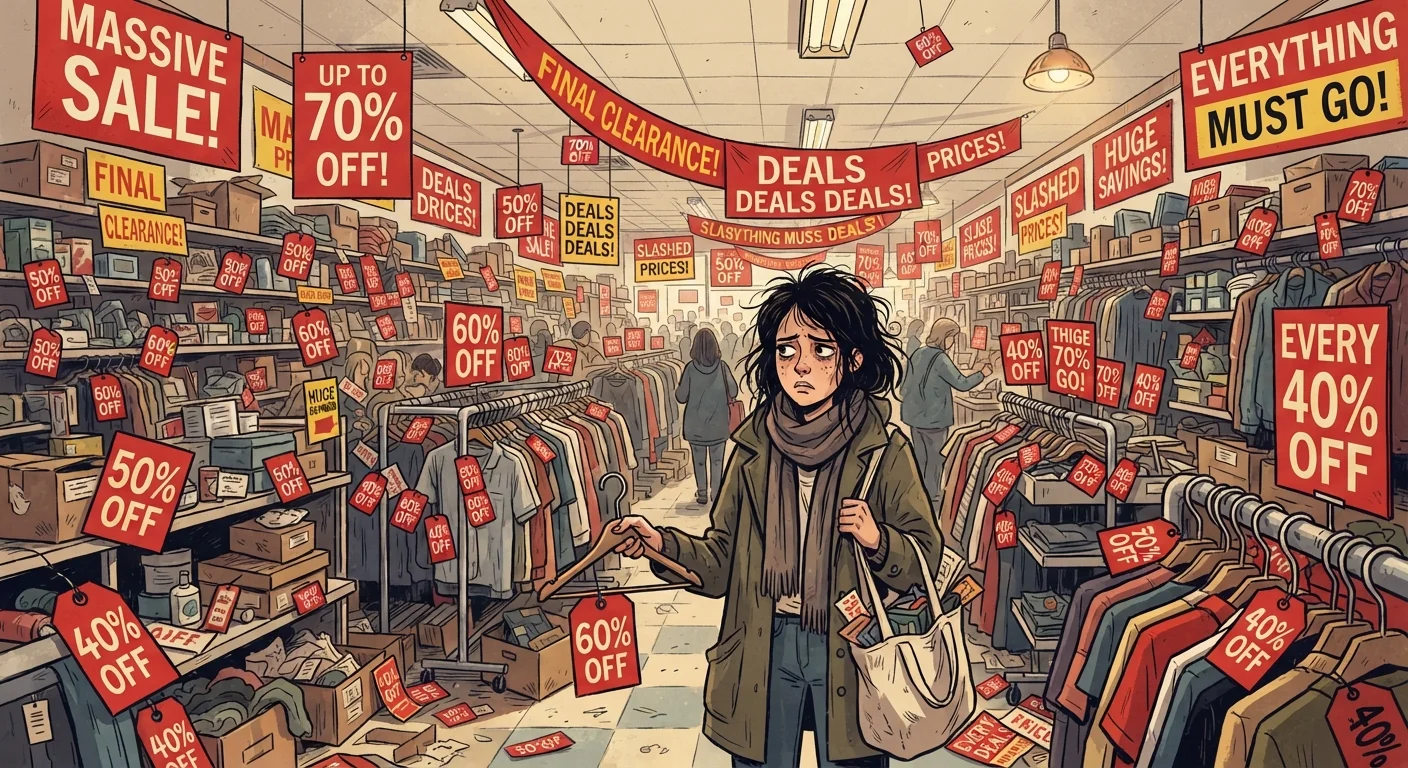
This is one of the most effective psychological levers retailers use. The framing of a "savings" amount on a receipt or price tag activates a sense of gain that can override the basic question of whether the purchase was necessary. Promotional pricing exists to move inventory and generate purchases that wouldn't otherwise happen. If a sale prompts you to buy something you had no prior need for, the full purchase price is an unplanned expense - the percentage off is irrelevant to your budget. This doesn't mean sales aren't useful; it means the starting point should be whether you need the item, not whether it's discounted.
What Smarter Shopping Actually Looks Like
Cutting through promotional noise doesn't require exhaustive research on every purchase. It mainly means pausing before acting on assumptions. Before buying in bulk, ask whether you'll realistically use it. Before assuming a loyalty card is working for you, check whether it has changed what - or how much - you buy.
~60%
Shoppers who regret impulse purchases
A Slickdeals consumer survey found roughly 6 in 10 shoppers reported regretting at least one impulse purchase made during a sale event.
Up to 30%
Price inflation before major sale events
Price-tracking analyses of major retail events have found pre-sale price increases on selected items can reach 30% above recent averages before the discount is applied.
Price history tools, available through browser extensions and some retail platforms, can show you whether a sale price is genuinely lower than the item's recent average. That one step alone can prevent the most common form of promotional pricing regret. For online shoppers, costly habits that drain your online shopping budget covers several related blind spots. And if free shipping is part of your calculation, the hidden costs buried in free shipping offers explains what that offer often conceals.
These same myth-busting principles apply across other spending categories too - similar patterns show up in cheap travel beliefs that aren't true and even in insurance myths that lead to overpaying. Promotional pressure is a feature of many markets, not just retail. Recognizing it in one area tends to make you sharper in others.
Urgency Language Is a Sales Tool
Phrases like 'only 3 left,' 'sale ends tonight,' or 'today only' are designed to compress your decision-making time and suppress comparison shopping. These claims are sometimes inaccurate or automatically reset. If a deal creates anxiety rather than clarity, that's a signal to pause, not act faster.