Why Maintenance Feels Overwhelming-and How to Simplify It
For many drivers, car maintenance feels like an unpredictable drain-something that only matters when a warning light flickers on. The reality is that most vehicles follow fairly predictable service schedules, and understanding the logic behind them makes the whole system far less intimidating.
The foundation of any maintenance plan is your owner's manual. Manufacturers publish specific intervals for every fluid, filter, and inspection based on engineering data for your exact engine and drivetrain. No general rule of thumb replaces that document. If you've misplaced yours, most automakers publish digital versions on their official websites.
It also helps to separate maintenance into two categories: time-based (every X months regardless of mileage) and mileage-based (every X miles regardless of time). Some items, like battery checks, lean time-based. Others, like air filters, are primarily mileage-driven. Many fall into both. Once you map your car's schedule this way, a pattern emerges that's much easier to track. Worth noting: several widely-held maintenance beliefs are outdated and may lead you to service your vehicle more-or less-often than necessary.
The Maintenance Tasks That Matter Most
Not all maintenance is created equal. Some tasks protect safety directly; others protect long-term reliability. Knowing the difference helps you prioritize if you're ever working with a tight budget or tight schedule.
Change your engine oil at the interval your manufacturer specifies-not a generic mileage rule
Engine oil lubricates hundreds of moving metal parts and breaks down over time and miles. Using the wrong interval-too long or unnecessarily short-either risks engine damage or wastes money. Modern synthetic oils and engine designs have pushed many manufacturer intervals well beyond the old 3,000-mile standard.
Inspect and rotate tires every 5,000-7,500 miles to promote even tread wear
Front and rear tires wear at different rates depending on drive configuration and steering load. Uneven wear shortens tire life, reduces traction, and can compromise handling in emergency maneuvers. Regular rotation extends the usable life of all four tires.
Check brake pad thickness and fluid condition at least once a year
Brake pads are a wear item with a finite life, and brake fluid absorbs moisture over time, lowering its boiling point and reducing braking performance. Catching pad wear before metal contacts rotor avoids far more expensive rotor replacement.
Monitor coolant, transmission fluid, and power steering fluid levels and condition on a regular schedule
These fluids degrade or get contaminated over time. Low or degraded coolant can cause overheating; worn transmission fluid accelerates internal wear; neglected power steering fluid can damage the pump. Most are inexpensive to top off or flush-far cheaper than the components they protect.
Replace cabin and engine air filters when they're visibly dirty or at the manufacturer's mileage interval
A clogged engine air filter restricts airflow, which can reduce fuel efficiency and engine responsiveness. A dirty cabin air filter degrades interior air quality and can strain the HVAC blower motor. Both are low-cost, often DIY-friendly replacements.
For a deeper look at one of the most safety-critical categories, our guide on tire pressure, tread depth, and rotation intervals covers the fundamentals that affect both safety and fuel economy.
Building a System That Actually Sticks
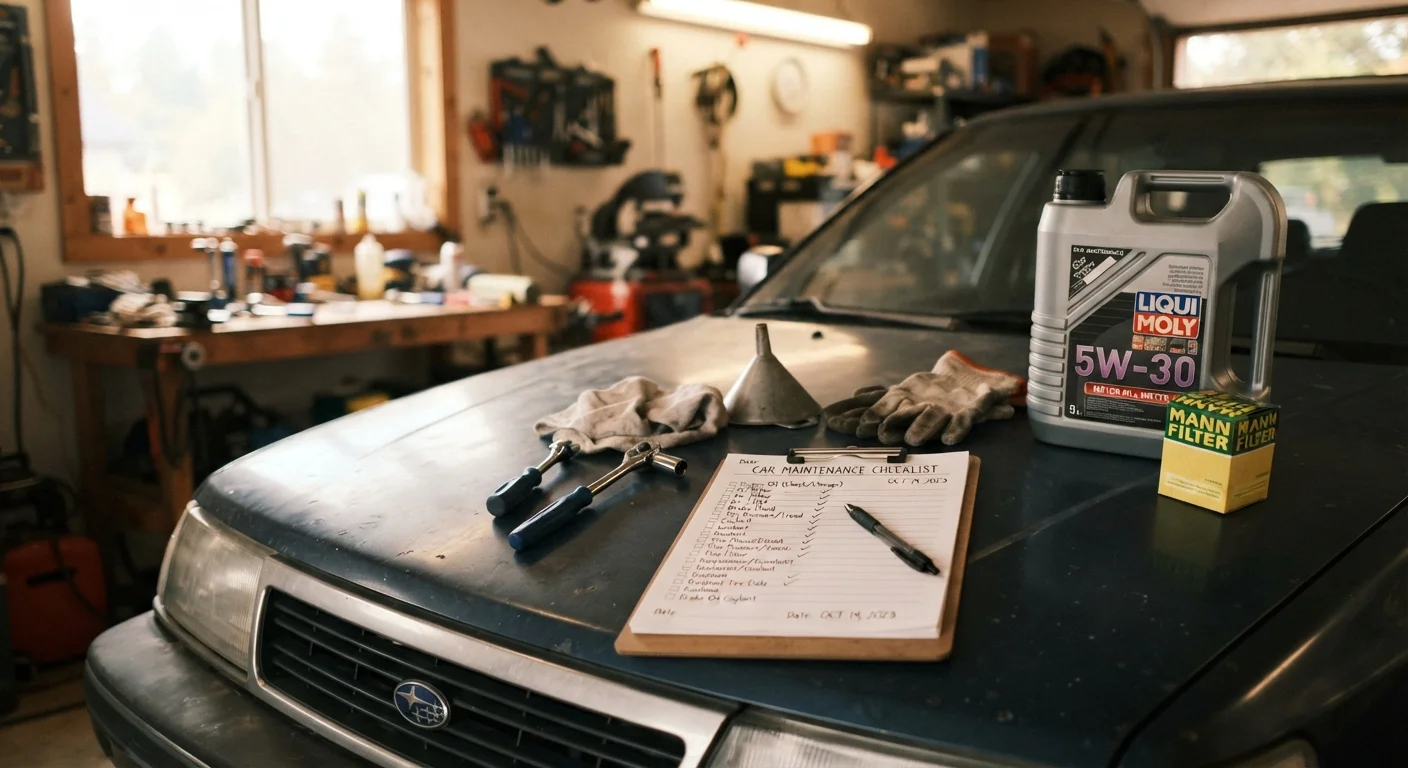
Knowing what to do is only half the battle-the other half is remembering to do it. A maintenance log, whether paper or digital, gives you a running record that removes guesswork and helps you spot patterns (like a fluid that keeps running low, which may signal a leak).
Some drivers find it useful to tie maintenance checks to existing routines: a quick walkaround when filling up with gas, or a tire pressure check at the start of each season. Small habits like these catch problems early, before they escalate. If you're newer to ownership, it's also worth reviewing common first-year ownership mistakes that can quietly void warranties or accelerate wear.
Keep a Simple Maintenance Log in Your Glove Box
A small notebook or printed log sheet stored in the glove box makes it easy to record service dates, mileage, and what was done at each visit. This record is also useful when selling the vehicle-documented maintenance history can support your asking price and builds buyer confidence.
And when a repair bill does arrive, knowing whether to fix the car or move on is its own skill-one our editorial team explores in when repairs outweigh replacement.