How Depreciation Actually Works
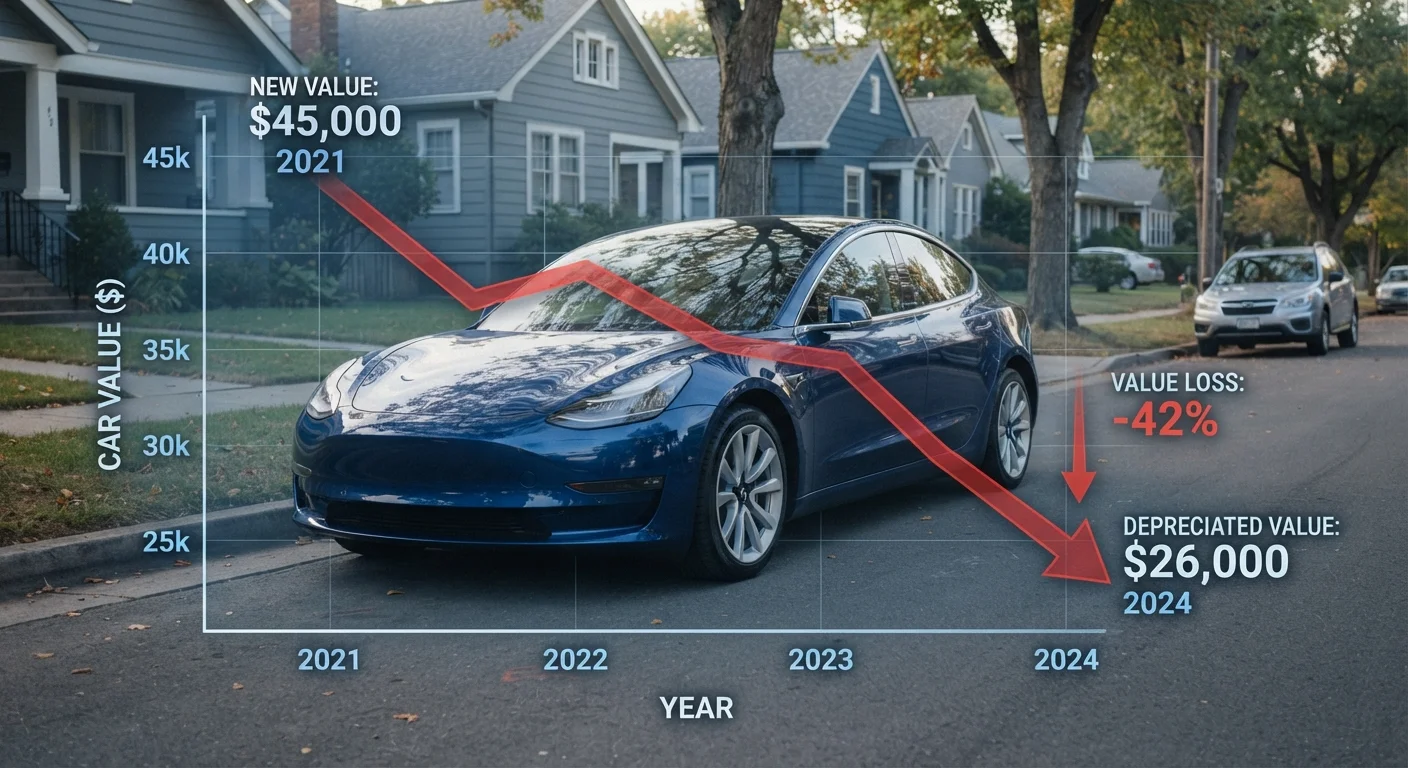
The moment a new vehicle is registered and driven off a dealer's lot, it crosses a threshold that cannot be undone: it becomes a used car in the eyes of the market. That shift alone accounts for a meaningful portion of its first-year value loss.
From there, depreciation follows a curve rather than a straight line. Losses are steepest in years one through three, then gradually flatten. By the time a vehicle reaches five or six years old, it has typically shed 50-60% of its original price - though the exact figure depends heavily on the make, model, and market conditions at the time of sale.
It's worth understanding that depreciation isn't inherently bad - it's simply how markets price age, uncertainty, and remaining useful life. The practical impact depends entirely on your ownership choices and how long you plan to keep the vehicle.
~20%
Average first-year value loss for new vehicles
Industry valuation sources consistently estimate new cars lose roughly 15-25% of their value within the first 12 months, with variation by segment and brand.
50-60%
Typical value lost by year five
According to long-standing automotive valuation methodology, most vehicles retain only 40-50% of their original price after five years of average use.
#1
Depreciation's rank among annual car ownership costs
Consumer financial analysts frequently identify depreciation as the largest single annual cost of vehicle ownership, ahead of fuel, insurance, and maintenance for many drivers.
What Speeds Up or Slows Down Value Loss
Not all vehicles depreciate at the same rate. Several factors meaningfully influence where a given car lands on the depreciation curve:
- Mileage: Higher annual mileage accelerates depreciation. Most valuation tools use 12,000-15,000 miles per year as a baseline. Exceeding that average reduces resale value because it signals more wear on drivetrain components.
- Condition and maintenance history: A well-documented service record and clean exterior and interior genuinely matter to buyers. Deferred maintenance or cosmetic damage increases perceived risk and lowers offers. Ignoring dashboard warning lights can lead to problems that harm resale value later.
- Vehicle segment: Pickup trucks and some SUVs have historically depreciated more slowly than sedans in the US market, largely due to sustained demand. Luxury vehicles often depreciate faster despite higher purchase prices.
- Brand reliability perception: Consumer and industry data consistently show that vehicles from brands associated with long-term reliability retain value better than those with weaker reputations.
- Supply and demand: When a model is discontinued or inventory is constrained, resale values can hold unusually well. The reverse is also true - high production volumes or model refreshes can drag down older versions.
Track Your Vehicle's Value Periodically
Using free online valuation tools to check your vehicle's estimated market value once or twice a year keeps you informed without requiring any financial commitment. Knowing where you stand relative to your loan balance helps you avoid being caught off-guard when it's time to trade, sell, or make an insurance claim.
What This Means for Your Ownership Decisions
Understanding depreciation shifts the way you think about vehicle costs. The sticker price and monthly payment are visible numbers; depreciation is not - yet it often represents the largest single line item in the true cost of ownership. For context, the real cost of owning a car extends well beyond the payment itself.
A few practical implications worth considering:
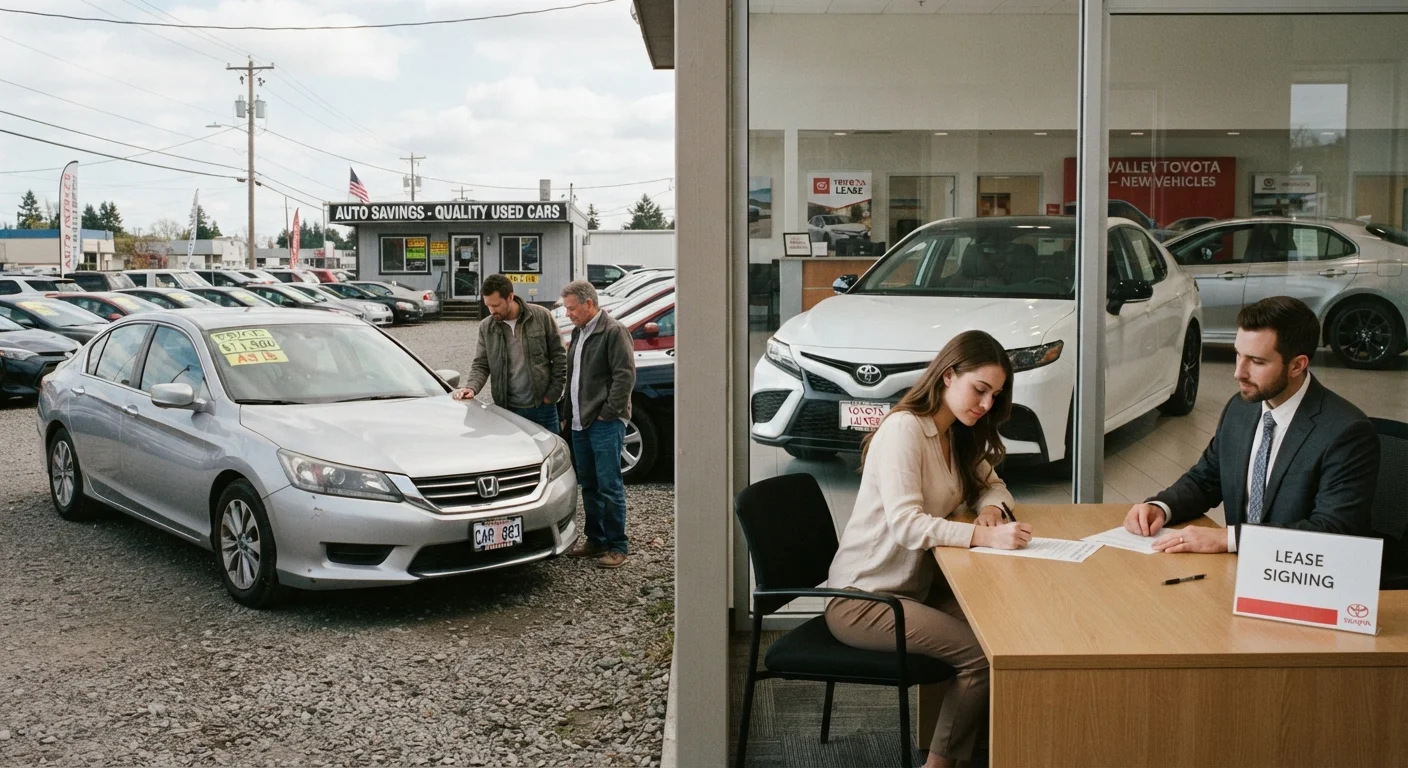
- Buying used transfers the steepest depreciation losses to the previous owner. A two- or three-year-old vehicle with reasonable mileage has already absorbed the sharpest value drop, yet typically retains most of its useful mechanical life.
- Holding a car longer lowers your average annual depreciation cost. If you paid $30,000 and sell at $15,000 after six years, that's roughly $2,500 per year. Spread across ten years, the same math improves significantly - assuming maintenance costs don't offset the gains.
- Loan pacing matters. If you finance a new vehicle with a long loan term and low down payment, early depreciation can put you underwater quickly. This is a real risk worth modeling before signing. See the full lifecycle of a car transaction for guidance on evaluating purchase decisions.
None of this means you should never buy new or trade frequently - circumstances vary. But treating depreciation as a concrete, calculable cost - rather than an abstract concept - leads to more grounded ownership decisions. The repair vs. replace decision is one place where this thinking becomes especially practical.