Why Subscription Costs Don't Feel Like Real Spending
When you hand over $20 at the register, you feel it. When $20 is charged automatically to a card you rarely look at, the transaction barely registers. That gap between paying and noticing is precisely how subscription spending builds up across a household without triggering much concern - until someone actually adds it all up.
Subscription businesses are designed around this dynamic. Small, recurring charges spread across a billing cycle exploit a well-documented quirk in how people evaluate ongoing costs versus lump-sum purchases. A $16-per-month streaming service feels meaningfully cheaper than a $192 annual payment - even though they're the same amount. Multiply that framing across a dozen services and the household's real monthly outlay can be surprisingly hard to estimate from memory alone.
“The subscription model shifts spending from a deliberate act to a passive default. The mental accounting that usually keeps spending in check simply doesn't engage when a charge happens automatically.”
— Consumer Finance Research Perspective, General consensus in behavioral economics literature on payment decoupling and subscription psychology
For a broader look at how recurring charges accumulate alongside other overlooked expenses, see our monthly expense audit checklist.
How Multiple Household Members Drive Subscription Overlap
In a single-person household, tracking subscriptions is relatively manageable. In a household with two adults, a teenager, and possibly a college student on a family plan, the picture gets complicated fast.
Each person typically manages their own accounts. One adult handles the streaming video service; the other signed up separately for a music platform and a fitness app. The teenager has a gaming subscription; someone downloaded a language-learning app last year and forgot about it. None of these individually seem unreasonable. Together, they represent a recurring monthly bill that nobody planned in aggregate.
~4-5
Streaming services the average U.S. household subscribes to
Industry research from multiple consumer surveys consistently finds households hold more streaming subscriptions than they initially report when asked to recall from memory.
$273
Estimated average monthly U.S. household subscription spend
C+R Research's Subscription Service Report found the average American household spends significantly more on subscriptions than self-reported estimates suggest, with a gap between perceived and actual spending.
2.5x
How much people underestimate their subscription spending
Consumer behavioral studies have found people routinely underestimate their recurring subscription costs by a factor of two or more when asked to guess without reviewing statements.
Shared accounts add another layer. When one subscription technically covers the whole household, members may not even know it exists on the budget - they just use it. Meanwhile, the person managing billing may have lost track of which services were added during promotional trials that later converted to paid tiers. The real cost of free trials and bundle deals is a pattern worth understanding before signing up for the next one.
The Categories Where Accumulation Is Fastest
Not all subscription categories behave the same way. Some are used daily and feel obviously worth reviewing; others sit quietly in the background collecting charges whether or not anyone touches them.
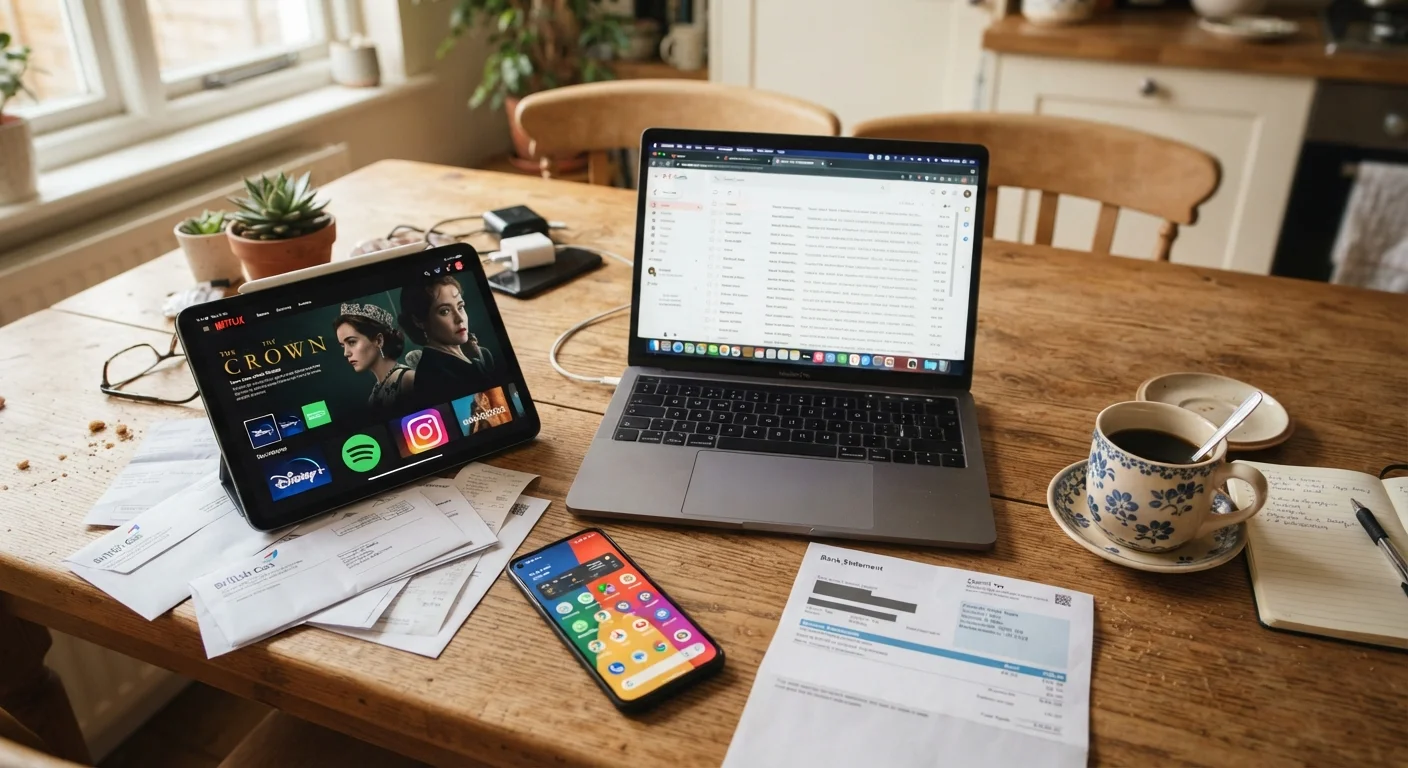
- Entertainment and streaming: Multiple video, music, and podcast platforms are the most common source of household overlap, especially since many services launched with low introductory pricing that has since increased.
- Software and productivity tools: Cloud storage, document editors, password managers, and design apps often carry annual billing, making them easy to forget between renewals.
- Health and fitness: Meditation apps, workout platforms, and nutrition trackers are frequently downloaded during a motivated period and left active long after regular use fades.
- Smart home services: Subscription tiers attached to security cameras, thermostats, and other connected devices are a growing and often underestimated category. Our article on hidden smart home costs covers this in detail.
- Apps and digital tools: Niche productivity and hobby apps are among the most commonly forgotten charges. The subscription apps you might have forgotten is a useful place to cross-check.
Check Every Billing Source, Not Just One
Subscription charges can originate from a credit card, a debit account, an Apple ID, a Google Play account, or directly through a service's own billing system. Checking only one source will almost always leave some charges unaccounted for. Reviewing all payment methods and device-level subscription lists together gives you the most complete picture.
Taking Stock: A Practical Starting Point
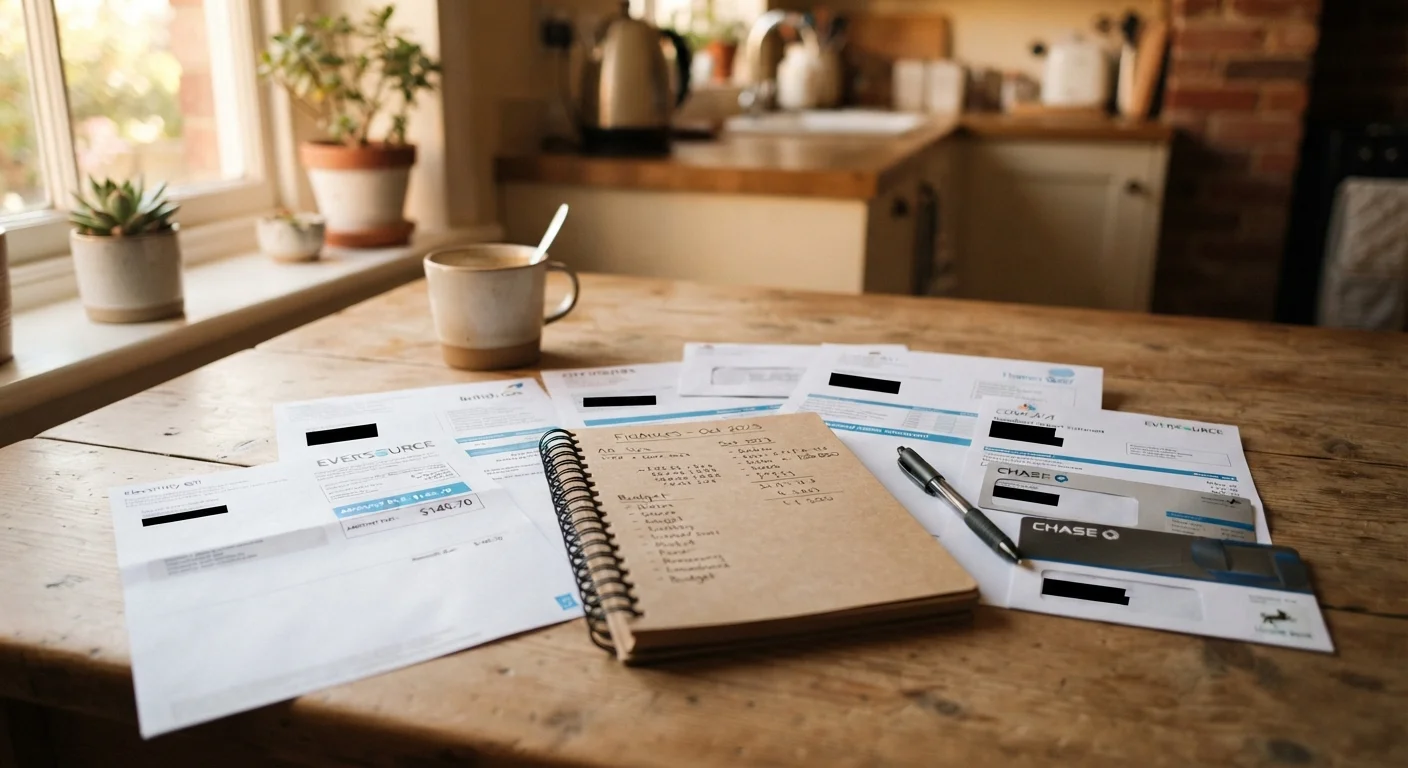
The first step is simply knowing what you're paying for - which is harder than it sounds. A practical approach is to pull three to six months of bank and credit card statements and flag every recurring charge, no matter how small. Then cross-reference against app store subscription lists on any devices in the household, since charges can originate from multiple billing sources.
Once you have a full picture, the question for each item is straightforward: does this still reflect an active, deliberate choice? Not every subscription that survives that review needs to be cancelled - but each one should be a decision, not a default. For households also grappling with rising grocery and food costs alongside subscriptions, it helps to look at overall spending patterns category by category. Our overview of grocery bill creep offers a useful parallel lens on how costs build in another major household category.
If your household relies on a lot of apps and digital tools, it's also worth reading about what app overload is actually costing you - the financial and attention costs are related. General principles for managing these charges are covered in the budgeting basics hub, and more specific digital tool guidance lives in the digital tools and apps section.