The Gap Between the Test and the Road
Passing a driving test in the United States means you've demonstrated a baseline - parallel parking, basic traffic signs, speed limits on a familiar route. It does not mean you're prepared for every situation the road will eventually put in front of you.
Driver education requirements differ significantly from state to state. Some states require as few as six hours of behind-the-wheel instruction before a license is issued. Most curricula are designed around the minimum needed to pass a standardized test, not around the full range of conditions a driver will encounter over a lifetime of driving.
The practical consequence: most new drivers enter the road having never practiced a skid correction, never driven in dense fog, and never learned what to do when a tire blows at 65 mph. These aren't rare edge cases - they're the situations where crashes happen. Understanding the gaps in formal training is the first step toward filling them.
Hydroplaning
When a layer of water builds between a tire and the road surface, causing the tire to lose contact and the driver to lose steering and braking control.
Brake fade
A temporary reduction in braking effectiveness that occurs when brake components overheat, most often during prolonged downhill driving.
Engine braking
Using the resistance of a vehicle's engine to slow the car by downshifting, rather than applying the brake pedal - useful for reducing brake heat on long descents.
TPMS
Tire Pressure Monitoring System - a sensor-based system that alerts drivers when one or more tires are significantly underinflated.
Right of way
The legal or conventional priority that determines which driver or pedestrian proceeds first in a shared traffic situation.
Understeer
A handling condition where the front wheels lose traction during a turn, causing the vehicle to continue forward rather than follow the intended curve.
Emergency Situations Nobody Practices
Emergency response is almost never part of standard driver education, yet it's precisely the skill that determines outcomes in a crisis.
Tire Blowouts
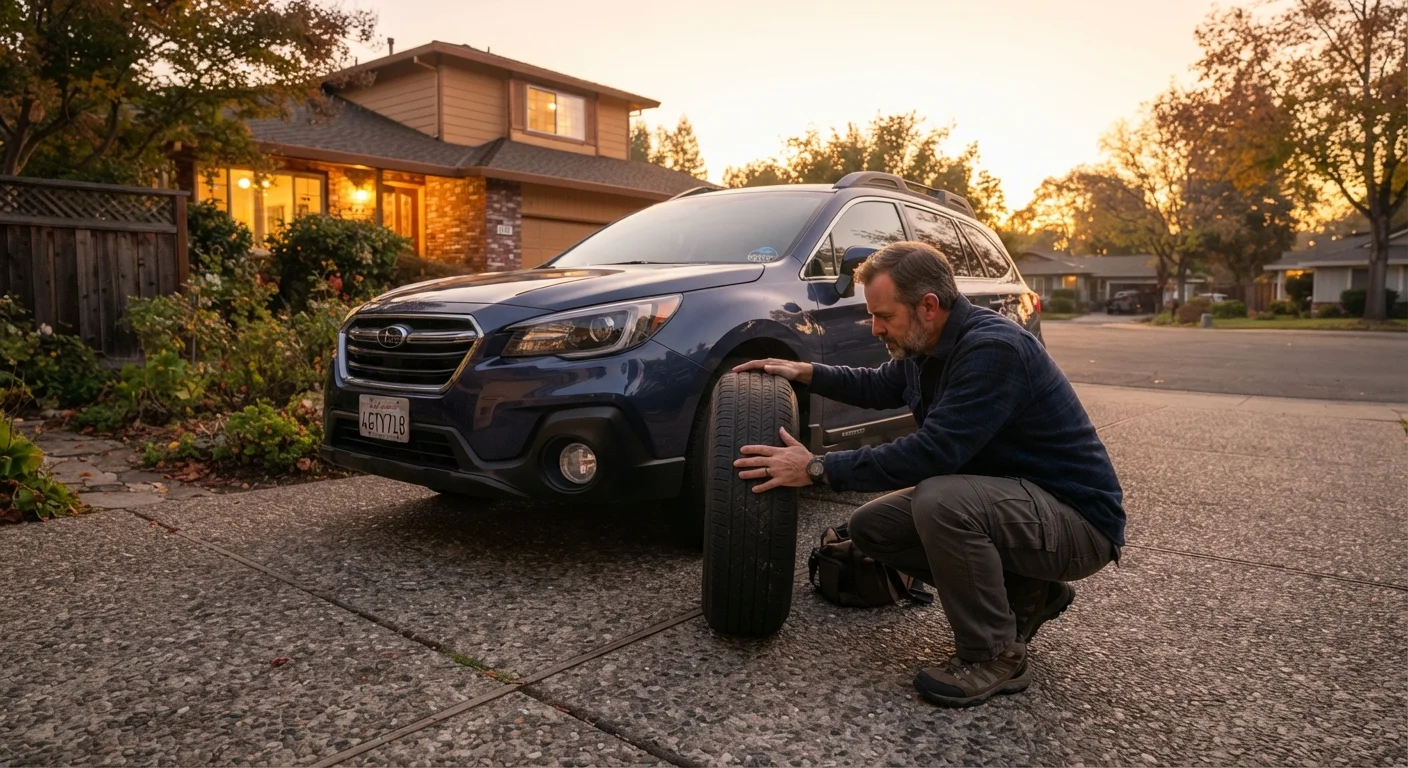
A sudden tire failure at highway speed feels violent and disorienting. The instinct to brake hard is almost universal - and almost always wrong. Hard braking after a blowout can pull the vehicle into a spin. The correct response is to maintain steering control with both hands, ease gradually off the accelerator, and allow the car to slow before steering toward the shoulder. Review tire fundamentals to understand how tire condition affects blowout risk.
Brake Fade
Brake fade occurs when brakes overheat - most commonly during sustained downhill driving. Many new drivers are unaware it exists until they experience reduced stopping power mid-descent. Using engine braking (downshifting on manual vehicles, selecting a lower drive mode on automatics) instead of riding the brake pedal prevents overheating on long grades.
Skids and Loss of Traction
Skid recovery technique differs depending on whether the vehicle has front-wheel, rear-wheel, or all-wheel drive. In a front-wheel-drive understeer skid - where the front wheels lose grip during a turn - easing off the gas helps the front tires regain traction. These distinctions are almost never taught in licensing programs but matter significantly in wet or icy conditions.
Never Practice Emergency Maneuvers on Public Roads
Skid recovery, blowout response, and emergency braking should only be practiced in a controlled environment such as an empty parking lot or a professional driving course. Attempting these maneuvers on public roads puts other drivers, pedestrians, and cyclists at serious risk. Several driver training programs across the U.S. offer controlled emergency response practice - consider seeking one out.
Weather and Low-Visibility Driving
Rain, fog, and darkness create driving conditions that require deliberate adjustments - not just slower speeds.
Heavy Rain and Hydroplaning
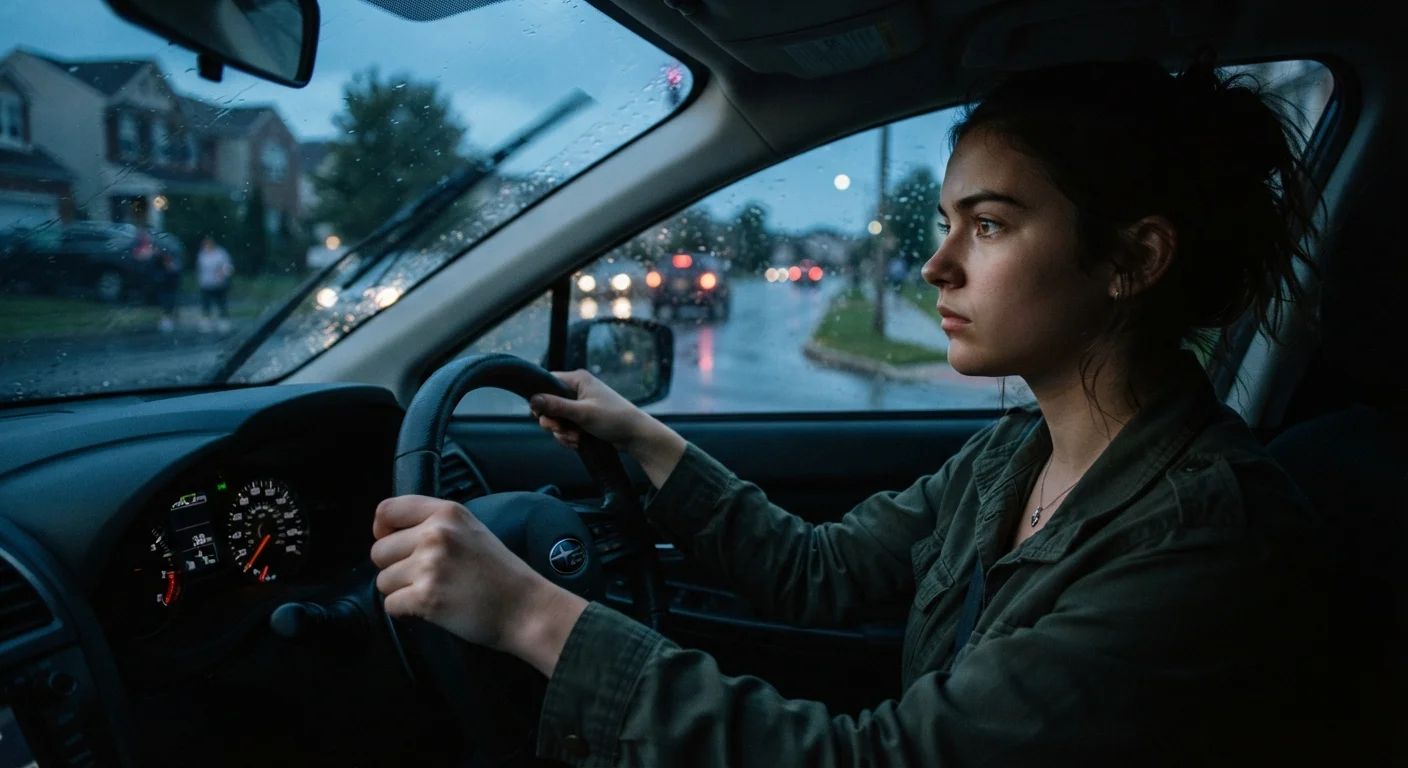
Hydroplaning occurs when a thin film of water lifts a tire off the road surface, eliminating steering and braking control. It can happen at speeds as low as 35 mph on worn tires or standing water. The corrective response - easing off the gas without abrupt braking and steering gently in the intended direction - is counterintuitive and requires prior knowledge to execute calmly.
Fog
Many drivers use high-beam headlights in fog, which is counterproductive: high beams reflect off water droplets and reduce visibility further. Low beams or dedicated fog lights (if equipped) are the appropriate choice. Slowing significantly below the posted limit and increasing following distance are essential, as stopping distances become critical when visibility is compressed to a few car lengths.
Night Driving
Depth perception, peripheral vision, and color recognition all diminish after dark, while glare from oncoming headlights adds additional stress. New drivers often underestimate how dramatically nighttime changes the driving environment. Our article on night driving hazards and preparation covers these conditions in depth.
Practice Low-Visibility Conditions Deliberately
If possible, ask an experienced driver to accompany you during your first drives in heavy rain, fog, or at night. Controlled exposure to these conditions - before you encounter them alone - builds the muscle memory and calm decision-making that emergency situations demand. Many driving schools offer advanced skills sessions beyond the licensing curriculum.
Road Rules That Confuse Even Experienced Drivers
Licensing tests cover rules in their simplest form. Real traffic presents layered, ambiguous versions of those same rules.
Four-Way Stops
Right-of-way at four-way stops follows a sequence most drivers know in theory but hesitate to apply under pressure: first to stop proceeds first; simultaneous arrivals defer to the vehicle on the right; vehicles facing each other require the left-turner to yield to oncoming straight-through traffic. Hesitation and over-politeness - waving other drivers through out of turn - actually increase collision risk by creating unpredictability.
Highway Merging
Merging onto a highway via an on-ramp requires accelerating to match highway speed before entering the travel lane - not merging slowly and hoping traffic accommodates. Both the merging driver and highway traffic share responsibility for a safe merge, but the merging vehicle must reach a compatible speed. For a detailed walkthrough, see merging onto the highway safely.
Speed and the Flow of Traffic
A persistent misconception holds that matching surrounding traffic provides legal cover above the posted limit. It does not. Speed limits are legal ceilings, and enforcement is at an officer's discretion regardless of surrounding vehicle speeds. The distinction between speed limits and traffic flow trips up drivers at every experience level.
Urban and freeway environments also demand different mental frameworks. The contrast between city and highway driving mindsets is a useful reference for new drivers navigating both.
Vehicle Awareness and Basic Maintenance
Knowing how to operate a vehicle is separate from understanding the vehicle itself - and the latter directly affects safety.
Warning Lights
Most new drivers can identify the fuel gauge but may not recognize the TPMS light, oil pressure warning, or engine temperature gauge. A red oil pressure light is not a reminder to schedule service - it indicates a potentially immediate mechanical emergency requiring the driver to stop safely as soon as possible.
Tire Pressure
Underinflated tires increase braking distance, reduce fuel efficiency, and raise blowout risk. The correct inflation figure for a vehicle is found on the door jamb sticker or owner's manual - not on the tire sidewall, which lists the tire's maximum pressure, not the vehicle's recommended pressure. This distinction confuses many first-time owners.
Building Good Habits Early
The habits established in the first year of driving tend to persist. New owners who skip learning these fundamentals often pay for it later. Our guide on what new car owners get wrong in the first year covers the most common avoidable missteps. And for those already developing habits worth examining, habits that quietly worsen your driving is worth reading sooner rather than later.
Formal licensing is a starting point. The driving education that actually matters accumulates through deliberate practice, honest self-assessment, and the willingness to learn what the test never covered.
Your Owner's Manual Is an Underused Resource
Most drivers never read their vehicle's owner's manual beyond the first few pages. The manual contains vehicle-specific guidance on warning lights, recommended tire pressure, fluid types, and towing limits - information that varies by make and model and cannot be reliably generalized. Spending an hour with the manual when you first get a vehicle is time well spent.